
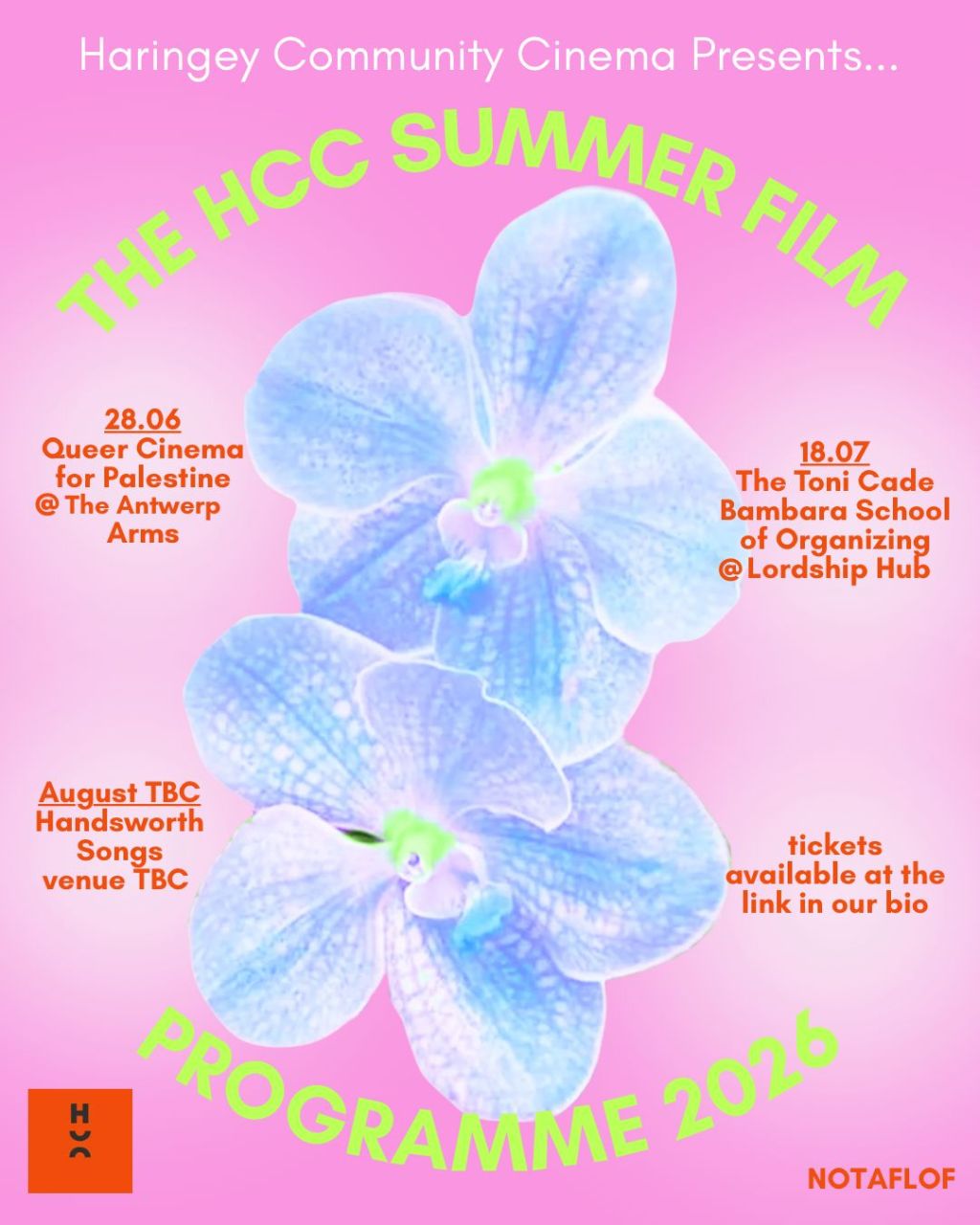

This summer, Haringey Community Cinema invites you to a series of screenings exploring liberation, solidarity, memory, and collective struggle.
Taking inspiration from Toni Cade Bambara‘s assertion that ‘the role of the artist is to make the revolution irresistible’, the programme brings together films that challenge dominant narratives and open up new ways of imagining political life. From queer Palestinian resistance and traditions of grassroots organising to Black British histories of migration, rebellion, and belonging, these screenings ask what culture can contribute to the unfinished work of freedom.
Each event will be accompanied by discussion, reflection, and opportunities to connect with others committed to building more just futures.
Join us for a summer of cinema, conversation, and collective imagination.
Our guest speakers for hosting our community conversations will be revealed in the coming weeks.
As always, our screenings are free to attend and open to all. (Make sure to check our new ticketing system!)
Screenings and Talks
First screening: Haringey Screens Queer Cinema for Palestine (with Haringey & Tottenham for a Free Palestine): No Pride in Genocide!
Date: 28 June 2026, 2PM – 5PM
Location: The Antwerp Arms (168-170 Church Rd, London N17 8AS)
Guest speakers: lisa minerva luxx x Hanna Al-Taher
Writing workshop: The screening will be followed by a letter writing workshop for the Filton 4. Please bring craft material if you wish.
Booking: Eventbrite
Second screening: TCB: Toni Cade Bambara’s School of Organizing by Louis Massiah and Monica Henriquez
Date/time: 18th July 2028, 2.30PM
Location: Lordship Hub (Higham Rd, London N17 6NU)
Guest speakers: Dr SM Rodriguez x Monica Henriquez
Booking: Eventbrite
Third screening: Handsworth Songs by John Akomfrah (TBC)
Date/time: August 2026
Location: TBC
Guest speakers: TBC
Booking: TBC
About the films
Queer Cinema for Palestine
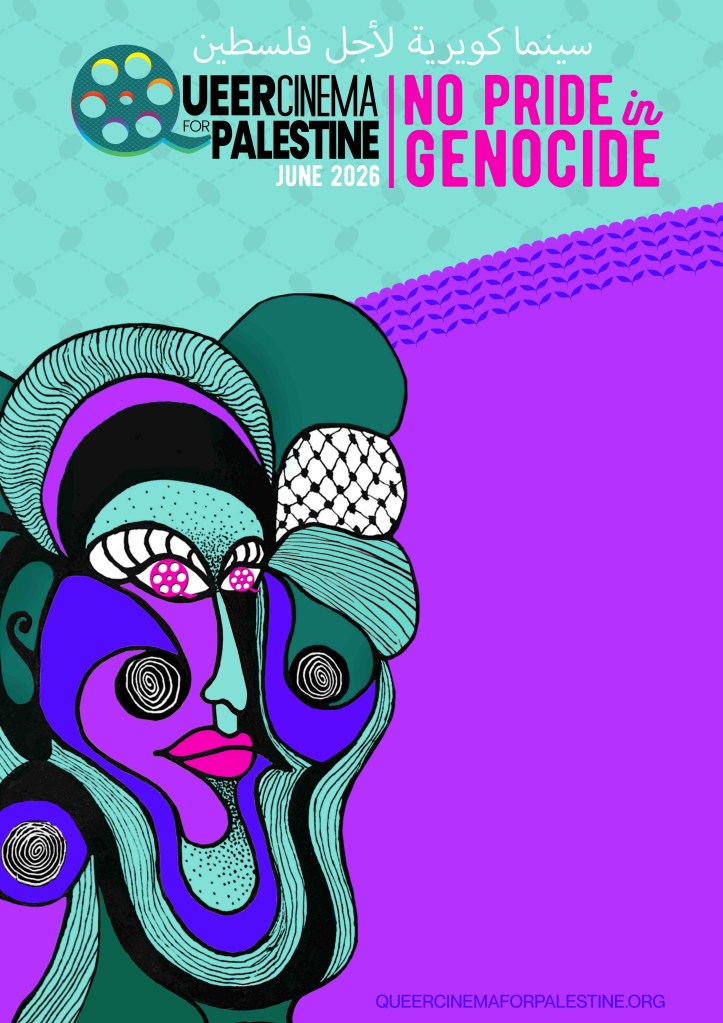
Queer Cinema for Palestine (QCP) announces No Pride in Genocide (June 2026), a global film event, co-organized by the Palestinian Campaign for the Academic and Cultural Boycott of Israel (PACBI). The fourth edition of QCP invites grassroots, solidarity and arts organizations across the world to host screenings of a stellar collectively curated short film program throughout the month of June 2026. Read more about this year edition.
Trailer (on Instagram)
About the films

A Message, Mama Ganuush, 2:51 min, Palestine (2026)
Audio: English
Subitles: English
A short documentary film capturing the queer Palestinian voices in exile.
Mama Ganuush is a trans Palestinian performance artist, filmmaker, organizer, and activist whose work is a potent and unflinching expression of Palestinian futurism. Based between San Francisco and Lisbon, their performances are a powerful synthesis of Palestinian folk art and music, the elegance of Egyptian golden-era dance, and the raw, spontaneous energy of clown and theater.

Ceasefire بِكَفِّي قَهْـر , Teodor Vladár, 23 min, Slovakia/Hungary (2025)
Audio: English, Arabic, Slovak
Subitles: English, Slovak
Nawras, a Jordanian-Palestinian queer artist, has been living in Slovakia, Bratislava for the past four years. Living within two communities and clashing cultures, she is pushed towards a third goal; to find peace and a place she can call home. Now, she is reclaiming the culture she was born into, this time, as she chooses to define it, and in doing so, creating a community which becomes her family.
Teodor Vladár is 21 years old and currently studying at the Academy of performing arts in Bratislava, Slovakia. He has studied in Spain and France, the latter being film studies in Paris. He is involved in queer and pro-Palestinian activism and wants to give voices to people by creating documentaries. He is a writer and a screenwriter as well, having won multiple short story competitions in Slovakia. He is also the host of a podcast “Nami o nás”, which focuses on queer identities in world filmography. “Ceasefire” is his directing debut, which he has created with the financial help of a crowdfunding campaign.

The 5-Year Plan for Financial Independence, Dua Omari, 7 min, Palestine (2025)
Audio: English
Subitles: English
This video reflects on Palestine’s history as a repeating cycle of injustice, imagining a future where the system remains unchanged and violence continues. It exposes the failure of the global system to deliver real justice, offering only symbolic solutions that do not improve daily life. Palestinians are forced to adapt to conditions below basic human dignity, kept in a state of false hope with no clear path to freedom or dignity.
Dua Omari is a visual artist from Jerusalem working across video and painting. She holds degrees in Psychology and Contemporary Visual Arts from Birzeit University. Her practice explores the intersection between the individual psyche and the political and social reality, with a focus on psychological and lived experiences under systems of oppression, particularly those of women, children, and Palestinian society under occupation. She has participated in local and international exhibitions and has completed artist residencies at the Spanish Academy in Rome and the A. M. Qattan Foundation.

Until We Return, Huss AC, 11 min, Egypt/Scotland (2025)
Audio: English
Subitles: English
Until We Return drifts between memory and dream, moving from the flicker of a sixth birthday on VHS to the final unknowing farewell of a vanished home. Unfolding like a passage along the Nile, through dreamlike currents of Cairo where memory and presence blur, part vision, part yearning, part possibility. Upon its waters, a fragile utopia awakens, a world where separation never came to be, where return is still within reach, and the home once lost flows back into being.
Huss is an Arab multidisciplinary artist, performer, filmmaker, and film programmer based in Glasgow. His work explores queerness, memory, and exile, weaving personal and political narratives that confront displacement, censorship, and survival. Moving across film, performance, installation, and sound, his practice creates space for fragmented histories and silenced voices, challenging dominant narratives around Arab and diasporic experience.

We Will Haunt Your Archive, R.R., 10 min, United States (2026)
Audio: English
Subitles: None
December 2, 2023. A queer protest erupts in San Francisco in solidarity with Palestine.The film situates this action within the longer history of ACT UP’s activism during the AIDS crisis. It explores glitch as a radical feminist tactic for resisting contemporary regimes of surveillance and silencing.
R.R. is a filmmaker, scholar, and multimedia journalist. He has worked as a journalist for international publications such as The Los Angeles Times and broadcast outlets including CNN and Al Jazeera Documentary Channel. His award-winning films have screened at international film festivals and venues such as IDFA, the Centre Pompidou in Paris, and the Pacific Film Archive in Berkeley.

Sorry, John Greyson, 7 min, Canada (2024)
Audio: English
Subitles: English
A portrait of three young women: Luna Alyaan, a young Gaza violinist, killed by an Elbit drone; Eden Golan, a Zionist singer who represented Israel at 2024’s Eurovision in Malmo; and Greta Thunberg, who lead protests at Eurovision that year. A dark satire of Israel’s weaponization of song for hasbara (propaganda) purposes, Sorry uses humour and pop culture to create a mash-up agit-prop in support of the ongoing Eurovision boycott and the Dump Elbit campaign. (Inspired by Toronto Palestine Film Festival’s Gaza Lives tribute to artists lost in the genocide).
John Greyson is an award-winning queer Toronto video/film artist, whose features, shorts and transmedia works include: Unauthorized Amplification Devices (2026), Gauze (2025), Door Prize (2025), Death Mask (2024), Photo Booth (2023), International Dawn Chorus Day (2020), Mercurial (2018), Gazonto (2016), Murder in Passing (2013), Fig Trees (2009), Proteus (2003), Lilies (1996), Zero Patience (1993), The Making of Monsters (1991) and Urinal (1989)..
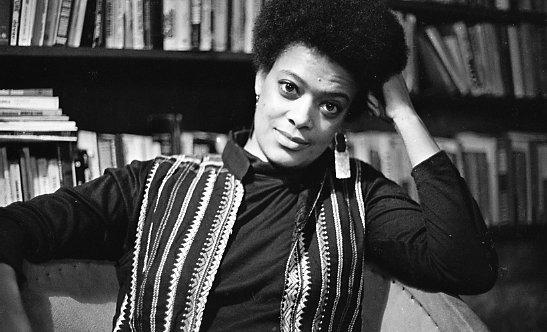
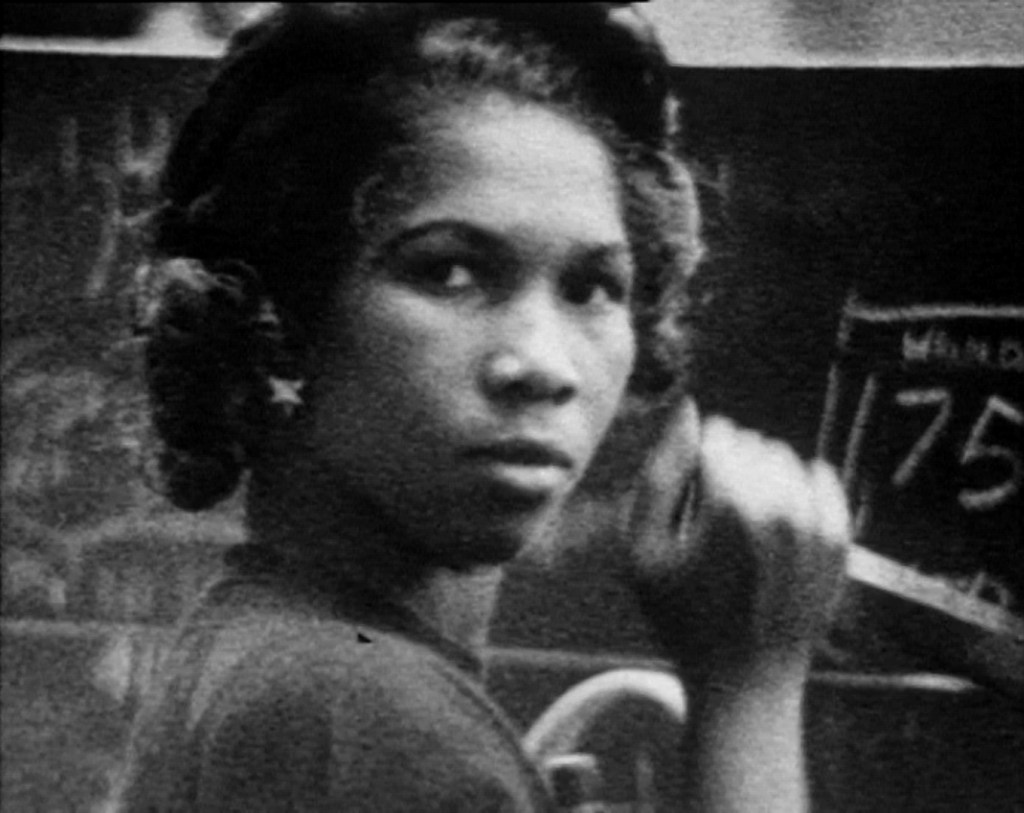
TCB: The Toni Cade Bambara School of Organizing (dir. by Louis Massiah, Monica Henriquez)
Friends of Black feminist writer, filmmaker and cultural worker Toni Cade Bambara come together to share her lessons on art, community and resistance.
Structured as a series of classes in cultural organising, TCB: The Toni Cade Bambara School of Organizing reconstructs the life of a woman whose literary works and film collaborations became a catalysing force in 20th century political movements. Toni Morrison, Nikky Finney and filmmaker Haile Gerima are among those who testify to Bambara’s humour, fierce commitment to collective action and gift for galvanising artists into community work. TCB: The Toni Cade Bambara School of Organizing is a warm and stylish portrait that makes a compelling case for why her approach to activism feels as urgent now as it did then.
Handsworth Songs (dir. John Akomfrah)
In October 1985 Britain witnessed a spate of civil disturbances in the Birmingham district of Handsworth and in urban centres of London. These were violent, tragic events, marked by the death of an elderly black woman, Joy Gardner and a white policeman, Keith Blakelock . Handsworth Songs takes as its point of departure these events and the inability of the British media to go beyond its concern with demonising or rationalising the rioters and their motives, to break the anxiety-driven loop of morbid responses to the presence of blacks in Britain.
Handsworth Songs explores the idea that the riots represented less a self contained drama of rage with a single origin and trajectory than a multiplicity of issues, ambivalences , to do with race, longing and belonging – not all of which could be shored up by recourse to a rhetoric of civil disorder. The film’s sense of multiplicity extends to a rethinking of black British presence, and a refuting of the idea of a homogenous black community with a single sense of presence characterised by uniformity of ambition and expression.
Instead the film evokes a broad range of voices, tones, registers. And it is through this panoply of positions and presences that Handsworth Songs approaches the riots and expresses its central idea – that it is not the riots in their dramatic unfolding, nor even in the wake of their violent eruption, which provide us with a route into the drama. Handsworth Songs contends that the meaning in the malaise is to be found in events outside the frame of contemporary reportage, in moments which seemed to have little affective relation to the expressions of discontent which characterised the riots – in the annals of post war news reportage around race in Britain, transformed in the film into an archive of black (un)belonging, in the expression of hopes of belonging brutally deferred.
About our Guest Speakers
Hanna Al-Taher
Hanna Al-Taher is a research associate at the Chair of Political Theory and the History of Political Thought at TU Dresden as well as an affiliated researcher at the University of Kassel and Queen Mary University London. Her research focuses include political theory, anticolonial research, borders, critical geography, Queer of Color critique and gender studies.
lisa minerva luxx
lisa minerva luxx is a British Syrian poet, essayist and organiser. Coordinator of the Filton 25 Defence Committee, who manage defendant and prisoner support, coordinate the public campaigns and media, and collaborate with the legal teams.
They were former spokesperson and organiser of the direct action network Palestine Action until it was shut down and prohibited as a terrorist organisation. They have published articles and essays on resistance in Al Jazeera, Electronic Intifada and PEN Transmissions. Author of Fetch Your Mother’s Heart (Out-Spoken 2021).
Monica Henriquez
Monica Henriquez is a Venezuelan/Dutch freelance film and video editor/director, based in the UK since 1978. She trained at the BBC in the 1980s, and worked as an editor for Channel Four (UK) in several projects on Latin America, notably the Marc Karlin Nicaragua Series (1985-1991); Faction Films Fidel (1998). For the U.S. network PBS, she was editor of WEB Du Bois – A Biography in Four Voices (1995), and was researcher/associate producer of The Hugo Chavez Show Frontline (2008). She was Producer/Director of Gynecological Chronicles (1992) and Director/Editor of Murder & the Feather Boa (1996), both for Channel Four UK. Recently she was the Editor/Director with Louis Massiah as Producer/Director of TCB – The Toni Cade Bambara School of Organizing.
Nandita Lal
Nandita Lal is a writer for The Canary. She stood against David Lammy in the general election 2024 and got 5% of vote. She is an organiser for Haringey and Tottenham for a Free Palestine
Dr. SM Rodiguez
Dr. SM Rodriguez is scholar-activist and Assistant Professor of Gender, Rights and Human Rights at the LSE.
Their research advances the understanding of the impact of racialisation, criminalisation, ableism, and the imposition of gendered and sexual control on people of African descent. With a monograph and over a dozen journal articles and book chapters, Dr. Rodriguez’s work has had a profound impact on scholarship, legal proceedings, and organizational practices.
In their first monograph, The Economies of Queer Inclusion: Transnational Organizing for LGBTI Rights in Uganda (2019), Dr Rodriguez analysed the effects of transnational advocacy on Ugandan LGBTI (kuchu) organising during the four-year period in which the Ugandan government considered the “Kill the Gays Bill”. The work used interviews, ethnography, and an analysis of fourteen years of Ugandan parliamentary records to examine the complicated impact of transnational financing on antigay ideologies, gay rights movement-making, and legislating morality.
Dr. Rodriguez’s current research centres two tracks. The first explores the globalisation of abolitionist feminist praxis. They are currently writing a monograph that explores the intersections of anti-slavery, anti-imperial, and anti-violence movements across Africa, the Caribbean, and their diasporas in the US and UK. In another research track, Dr Rodriguez examines the political processes involved in or countering gender and sexual identification. Work in this area includes the Nonbinary Identity Project and collaborations that address the relationship between surveillance, regulation, and gender expansive identity formation.
In addition to their research endeavours, Dr Rodriguez has launched two major initiatives: Black Queer Movements, the global knowledge-exchange hub for LGBTIQ activists of African descent, and a UK higher education racial equity project, called The Black Professors Pipeline.
Research Member of the Mannheim Centre for Criminology.
About HCC
Haringey Community Cinema (HCC) was launched in April 2025 and is run by volunteers. Inspired by Brixton Community Cinema, HCC is aimed at bringing residents of Haringey together through film. Our mission is to showcase films that challenge, inspire, and spark critical reflection—films that make us think and act.
 Haringey Community Cinema